Maldives tourism records robust growth in 2025, outlook remains positive for 2026
Tourist arrivals in the Maldives rose 9.9 percent year-to-date, with December arrivals up 8.3 percent, while policies emphasising market diversification and sustainability reinforced sector performance and future growth potential.
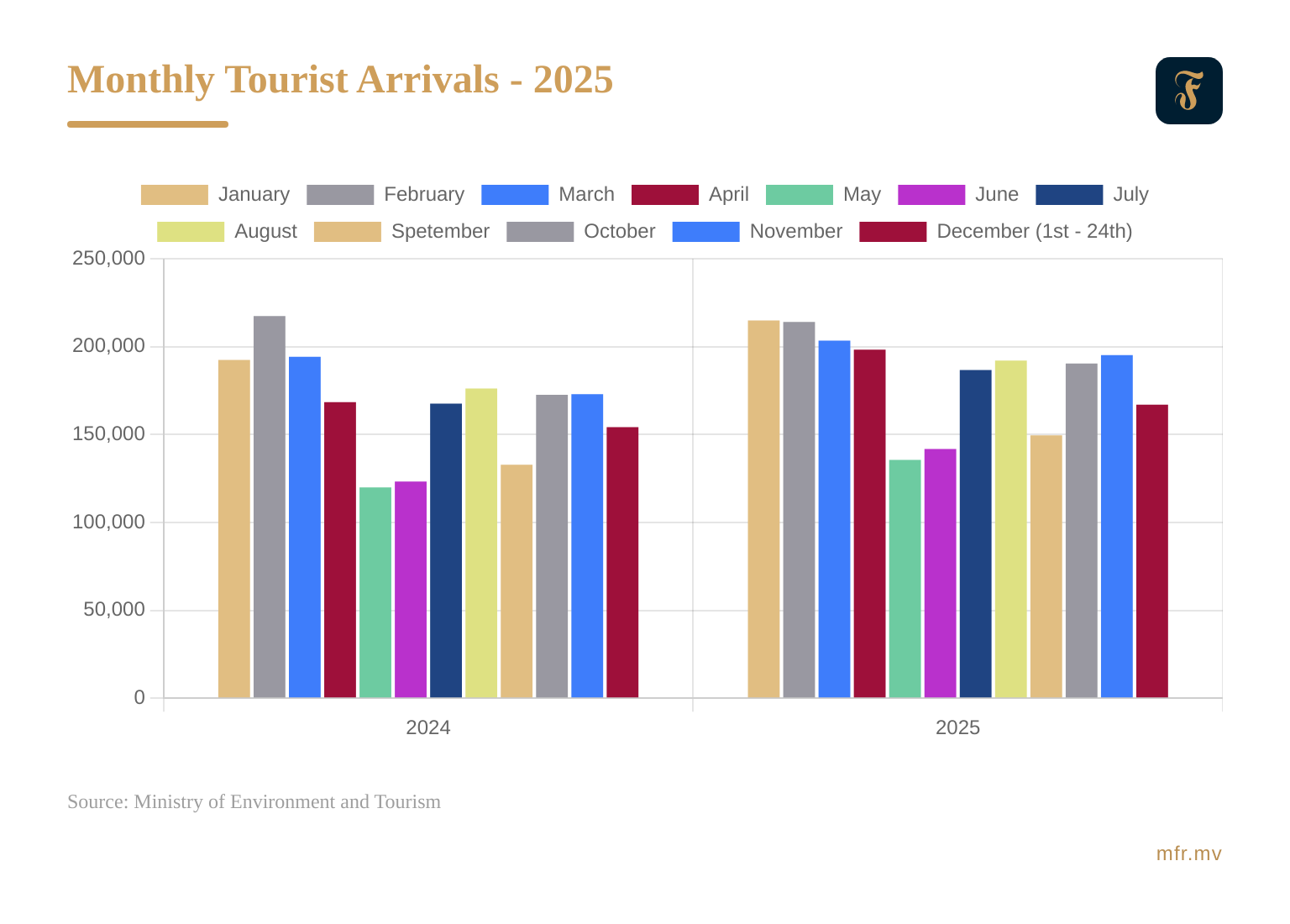
Tourism sector in the Maldives continued to demonstrate strong resilience and sustained growth throughout the year 2025, underpinned by robust international demand, expanded air connectivity, and steady increases in accommodation capacity. Latest data from Maldives Tourism Updates published by the Ministry of Tourism and Environment states that tourist arrivals have increased by 9.9 percent compared to the corresponding period of last year, indicating that tourist arrivals remained on a firm upward trajectory.
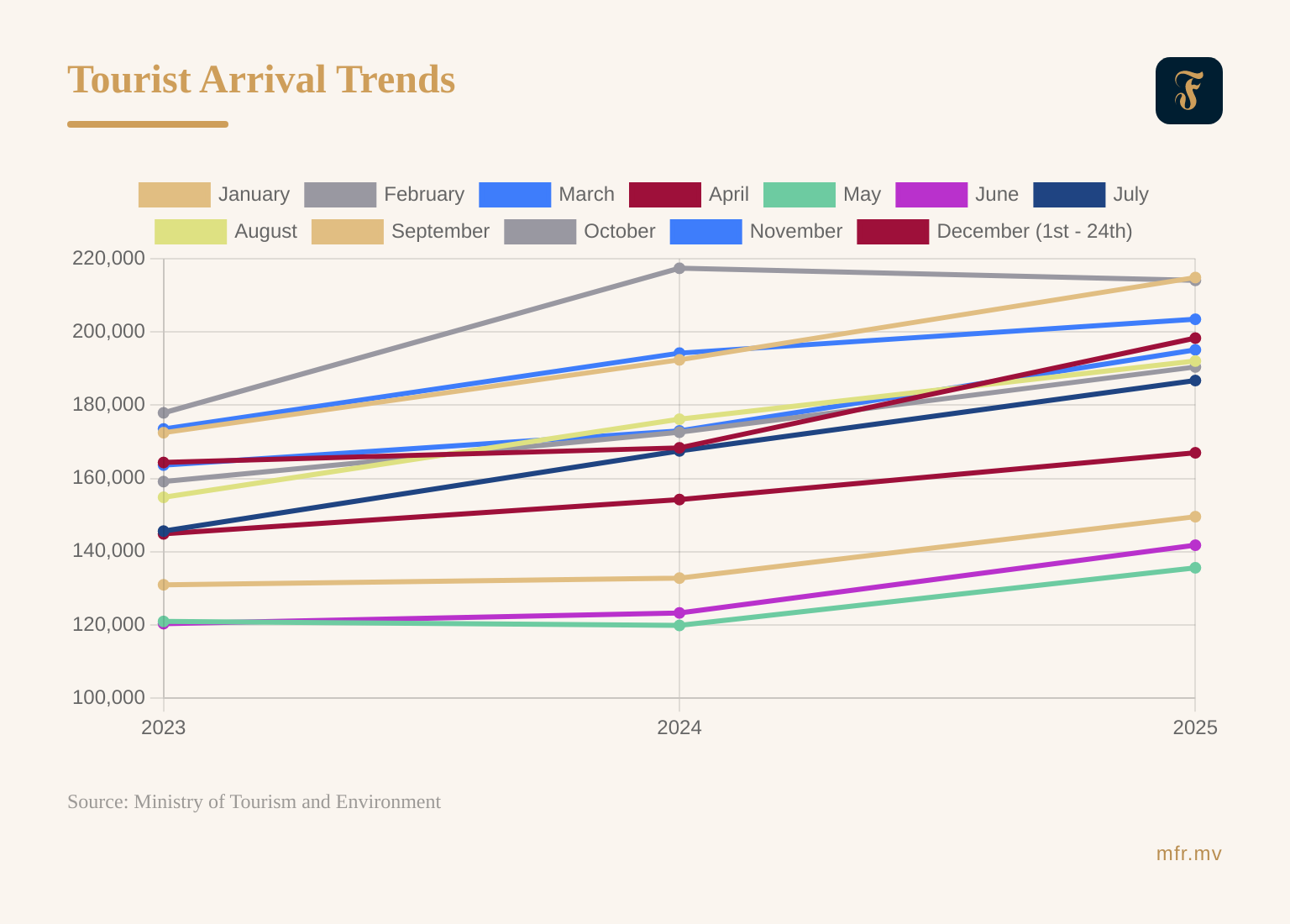
While tourist arrivals in 2025 exceeded 2024 levels in nearly all months, the increase in arrivals was strong from April onward, with double-digit increases recorded between April and November, peaking at 17.8 percent in April. Mid-year performance of the industry remained strong, supported by sustained demand through July and August. Arrivals during December (1–24) increased by 8.3 percent, as the momentum continued toward year-end.
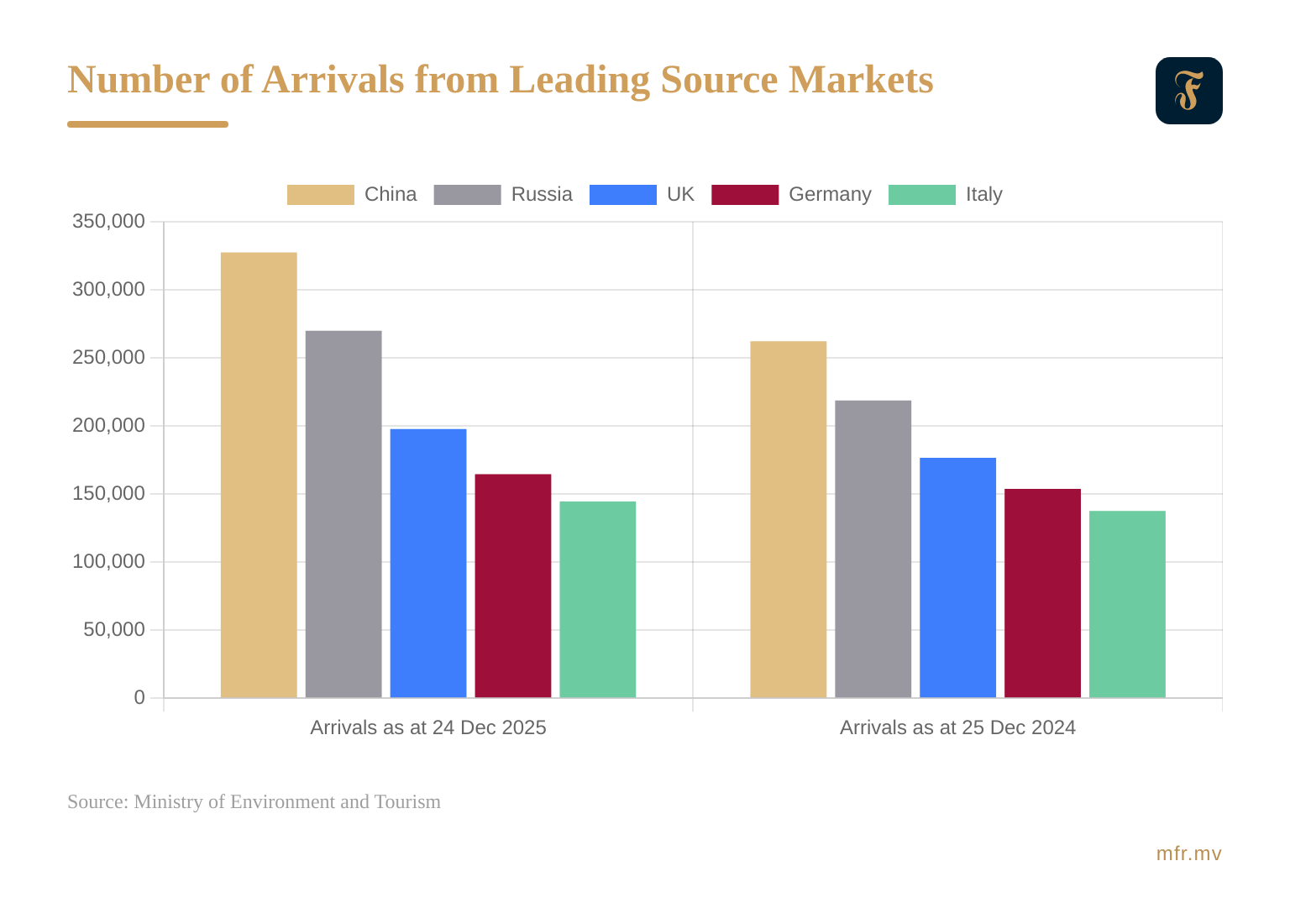
Though arrival growth continues to be driven primarily by peak-season demand and remains highly seasonal, mid-year improvements this year suggest a gradual strengthening of demand during the traditionally off-season, indicating a modest easing of historical seasonality. Data on source markets reinforce these patterns, with China and Russia recording the strongest growth in both absolute arrivals and market share by December 2025, accounting for 15.0 percent and 12.6 percent of total arrivals, respectively, up from 13.1 percent and 10.9 percent in 2024.
On the supply side, tourism capacity continued to expand in response to growing demand. As of 25 December 2025, the total number of tourist accommodation facilities and available beds increased by 3.4 percent compared to the previous year. Resorts accounted for 66 percent of total bed capacity, distributed across 178 properties in 19 atolls, while guesthouses contributed 25 percent. By comparison, resorts represented 67 percent of bed capacity in 2024, whereas the share from guesthouses remained unchanged.
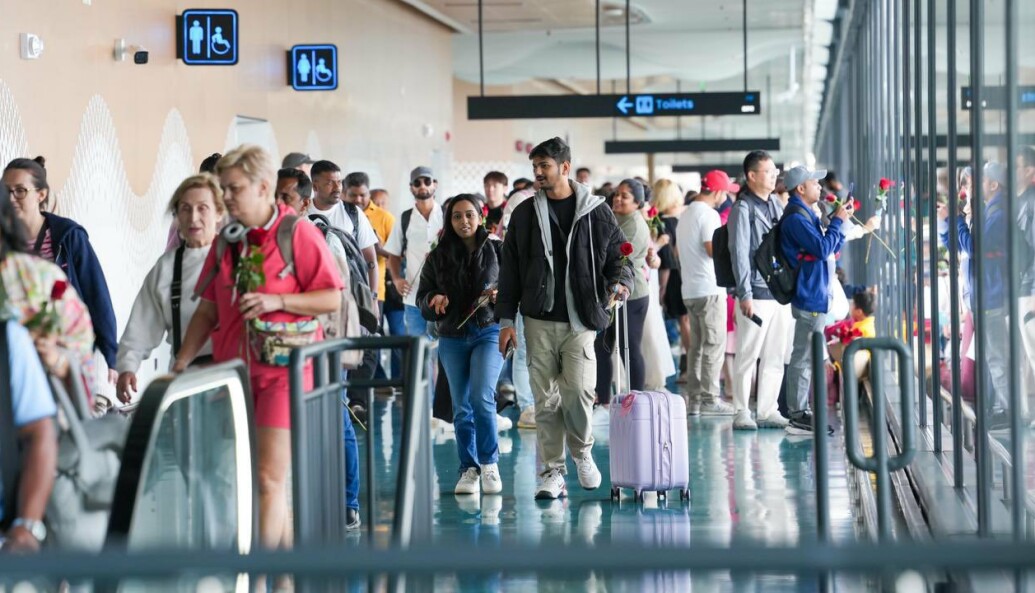
Air connectivity remained a key driver of sectoral growth throughout the year, and by the year end, the Maldives was connected to major markets across Asia, Europe and the Middle East through scheduled and charter flights. Opening of the new terminal at Velana International Airport is expected to further expand routes and frequencies, enhance accessibility, and support the continued recovery and growth of long-haul flights.
The outlook for the tourism sector remains positive, although risks persist. While global economic uncertainties and geopolitical developments could weigh on demand in some markets, maintaining competitiveness will require continued attention to service quality, environmental sustainability, and infrastructure resilience. Sustained policy focus on market diversification, investment facilitation, and sustainable tourism development will be critical to consolidating recent gains and ensuring that tourism continues to deliver inclusive and resilient growth over the medium term.