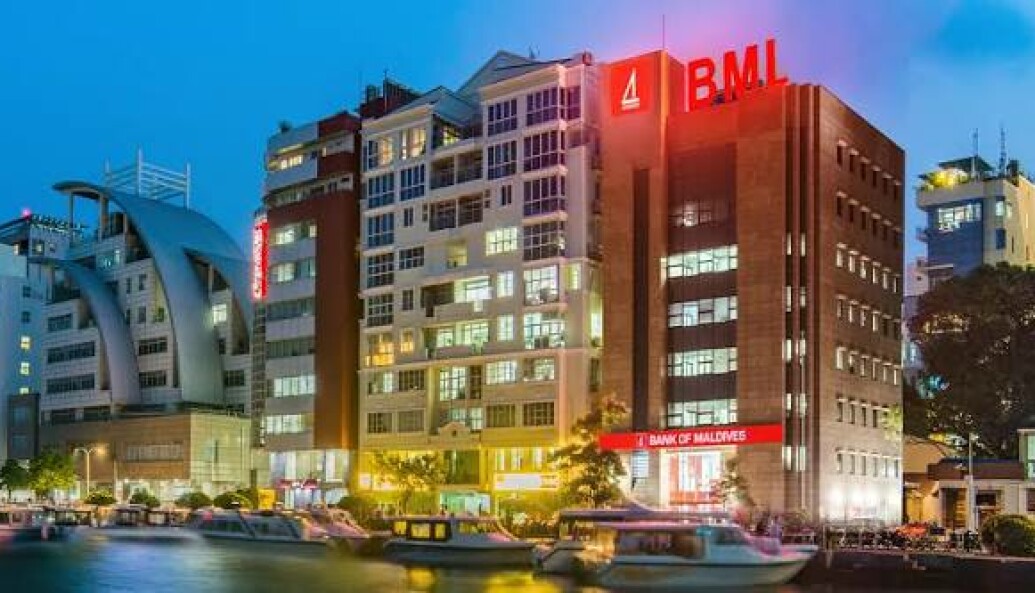
BML releases its third-quarter report, highlighting the bank's financial strengths and support to the Maldivian economy
The Bank has delivered its best-ever financial performance for the first nine months of the year. Profit after tax for the period reached MVR 1.93 billion, compared with MVR 1.53 billion for the same period in 2025, an increase of 26%. For the full year 2025, the Bank reported profit after tax of MVR 2.47 billion.
▪ Best-ever nine-month performance. Profit after tax for the nine months ended 30 September 2026 was MVR 1.93 billion, the highest in the Bank's history for any comparable period and 26% above the MVR 1.53 billion recorded in the first nine months of 2025.
▪ Stronger third quarter. Profit after tax for Q3 2026 was MVR 647.2 million, compared with MVR 475.4 million in Q3 2025, an increase of 36%.
▪ Robust capital. Capital adequacy ratio of 38% at 30 September 2026, more than three times the regulatory minimum of 12%.
▪ Growing customer confidence. Customer deposits reached MVR 42.36 billion, up 14% from MVR 37.19 billion at 31 December 2025.
▪ New record lending levels. Total new loans disbursed of MVR 12.1 billion, higher than total loans disbursed during the full year in 2025.
▪ USD 2.86 billion of foreign payments executed. Outward foreign currency payments of USD 2.86 billion in the first nine months of 2026, 27% higher than the same period of 2025, across more than 373,600 cross-border remittances.
▪ USD 722.1 million made available to customers. Foreign currency provided to customers against Maldivian Rufiyaa in the first nine months of 2026 almost equalled the USD 733.8 million provided in the whole of 2025. The monthly average of USD 80.2 million is 31% above the 2025 average.
▪ September is a seasonal low. September is consistently the weakest month for foreign currency inflows, and the Bank plans for it each year. Inflows strengthen as the tourist season gathers pace in the fourth quarter.
Record Financial Performance
The Bank has delivered its best-ever financial performance for the first nine months of the year. Profit after tax for the period reached MVR 1.93 billion, compared with MVR 1.53 billion for the same period in 2025, an increase of 26%. For the full year 2025, the Bank reported profit after tax of MVR 2.47 billion.
The third quarter continued this trend. Profit after tax for Q3 2026 was MVR 647.2 million, 36% higher than the MVR 475.5 million reported for Q3 2025. Net interest income for the quarter was MVR 874.8 million (Q3 2025: MVR 729.7 million), and non-interest income was MVR 377.5 million (Q3 2025: MVR 355.9 million).
This performance has been driven by sustained growth in lending to key sectors of the economy, a growing and diversified deposit base, increasing digital transaction volumes, and continued cost discipline. The Bank's cost-to-income ratio of 28% remains among the most efficient in the region. Return on equity for the period was 14%.
The Bank's balance sheet continued to expand. Total assets stood at MVR 65.6 billion at 30 September 2026, compared with MVR 55.8 billion at 31 December 2025. Net loans and advances grew to MVR 32.9 billion (31 December 2025: MVR 25.2 billion), and customer deposits grew to MVR 42.4 billion (31 December 2025: MVR 37.2 billion).
Asset quality continued to improve. The Stage 3 (credit-impaired) loan ratio declined to 4.8% at 30 September 2026 from 6.0% at 31 December 2025, with provision coverage of 100%. These results are particularly encouraging as this was achieved against a challenging operating environment, including the impact on the local economy from the heightened geopolitical tensions and the ongoing conflict in the Middle East.
2026 is on course to be the strongest year in the Bank's history. Our capital and liquidity remain robust, and our balance sheet continues to grow on the back of the trust that customers place in us every day. In the first nine months of this year alone, we made more than USD 720 million available to. individuals and businesses, almost as much as in the whole of last year, and we executed over USD 2.86 billion of foreign payments on behalf of our customers. That is the clearest measure of our commitment to the Maldivian economy. September is, as it is every year, the quietest month for foreign currency inflows, and we plan for it. We will continue to manage foreign currency responsibly and fairly, prioritising the needs that matter most to Maldivian families and businesses, while building the long-term funding the country needs to grow.
CEO & Managing Director Shareef
A Safe and Sound Capital and Liquidity Position
Capital
The Bank remains one of the most strongly capitalised banks in the region. Its capital adequacy ratio stood at 38% at 30 September 2026, compared with a regulatory minimum of 12%. This gives the Bank substantial capacity to absorb shocks while continuing to grow its lending to the economy. The movement in the ratio since 31 December 2025 (48%) reflects the deployment of capital into new lending and investments, consistent with the Bank's capital management strategy.
Liquidity
The Bank's liquidity position is sound and actively managed, and all regulatory liquidity requirements have been met throughout the year. At 30 September 2026:
▪ liquid assets represented 36.5% of customer deposits; and
▪ the loan-to-deposit ratio was 77.6%, within the Bank's internal limit of 90%.
The Bank's Rufiyaa liquidity is particularly strong. The Bank holds a substantial portfolio of high- quality liquid assets, and its large, granular and growing customer deposit base provides a stable source of funding. Liquidity is monitored daily by the Bank's Treasury and reviewed regularly by the Asset and Liability Committee and the Board Risk Committee, under a framework of limits, early-warning indicators and contingency funding arrangements.
Operating Environment
Global conditions
The global environment for raising and holding US dollar funding has become more demanding. US dollar interest rates remain elevated relative to the past decade, and geopolitical tensions and volatility in oil prices continue to weigh on the outlook for the world economy. International investors have become more selective towards frontier and tourism-dependent economies, and the risk premia they require have remained elevated.
For financial institutions in smaller economies, these conditions have translated into fewer, shorter and more expensive wholesale and correspondent US dollar funding lines. The cost of raising, holding and managing each US dollar has therefore increased for banks across the region, including the Bank.
Domestic conditions
The Maldivian economy remains fundamentally strong, anchored by a world-class tourism industry. Foreign currency earnings are, however, concentrated in tourism and follow its seasonal cycle, while demand for foreign currency arises throughout the year from imports of food, fuel and construction materials, debt service, and the needs of households.
Household demand for foreign currency has grown strongly. Maldivians are travelling, studying, seeking medical treatment and shopping online overseas more than ever before, and international card spending has become a major and growing source of foreign currency demand. This reflects rising incomes and the increasing digitalisation of everyday life, but it also means that demand for US dollars is growing faster than the seasonal flow of foreign currency into the banking system.
Implications for the Bank
As the country's largest bank and the primary banking partner for the tourism industry, the Bank sits at the centre of these flows. The combination of a higher global cost of US dollar funding and rapidly rising domestic demand places real pressure on the Bank's foreign currency resources.
The Bank manages these pressures through disciplined balance sheet management, by mobilising and retaining foreign currency deposits, by diversifying its sources of long-term foreign currency funding, and by keeping its products and pricing under regular review so that they reflect prevailing market conditions and the Bank's risk appetite. This approach protects the Bank's financial strength, which in turn protects its depositors, shareholders and the wider economy.
Supporting the Maldivian Economy
Foreign currency payments executed for customers
The Bank processes the majority of the country's foreign currency payments, enabling businesses to import goods, pay suppliers and service their obligations, and enabling individuals to support family, education and medical needs abroad. In the first nine months of 2026:
▪ total outward foreign currency payments, comprising outward remittances and import letters of credit, amounted to USD 2.86 billion, an increase of 27% on the USD 2.25 billion executed in the first nine months of 2025;
▪ the Bank processed close to 373,600 outward remittances, 19% more than the remittances processed in the same period of 2025;
▪ outward payments averaged USD 318 million per month, compared with a monthly average of USD 273 million for the whole of 2025; and
▪ Over the same period, the Bank received foreign currency inflows, through inward remittances and net card settlements, of USD 2.96 billion, 15% higher than in the first nine months of 2025, reflecting the depth of the Bank's relationships with the tourism sector.
Foreign currency made available to customers
In addition to executing payments from customers' own foreign currency, the Bank provides foreign currency to customers in exchange for Maldivian Rufiyaa to meet essential and everyday needs. In the first nine months of 2026, the Bank made USD 722 million available in this way.
This is almost equal to the USD 734 million provided in the whole of 2025, and represents a monthly average of USD 80 million, 31% higher than the 2025 monthly average of USD 61 million and more than two and a half times the 2022 monthly average of USD 32 million. Since 2021, the Bank has made more than USD 3.0 billion of foreign currency available to customers against Rufiyaa.
The support provided in the first nine months of 2026 comprised:
▪ Card transactions: USD 336 million. International card spending by customers holding Rufiyaa-linked cards averaged USD 37 million per month, 15% above the 2025 average and nearly three times the 2022 average. E-commerce accounted for USD 208 million, or 62% of the total, with point-of-sale spending abroad of USD 93 million and overseas cash withdrawals of USD 34 million.
▪ Telegraphic transfers: USD 224 million. Foreign currency provided for customer transfers already exceeds the USD 175 million provided in the whole of 2025 by 28%, with a monthly average of USD 25 million compared with USD 15 million in 2025.
▪ Travel Cash: USD 86 million, including USD 5.8 million for Hajj and Umrah pilgrims.
▪ Education: USD 40 million, supporting Maldivian students abroad, with a monthly average of USD 4.4 million, 16% higher than in 2025.
▪ Medical: USD 33 million, more than double the USD 14 million provided for medical needs in the whole of 2025.
These figures demonstrate the scale of the Bank's contribution to the everyday functioning of the economy, and the extent to which the Bank has continued to meet growing demand even as global funding conditions have tightened.
The Seasonal Pattern of Foreign Currency Inflows
Foreign currency inflows into the Maldives follow the tourism calendar. Inflows are strongest during the peak tourist season from December to April and moderate during the southwest monsoon months from May to October. Within this cycle, September is consistently the low point for the Bank's foreign currency inflows.
▪ In 2025, the Bank's foreign currency inflows in September were USD 257 million, around 17% below the monthly average for that year, and September recorded the largest net foreign currency outflow of any month in 2025.
▪ In 2026, inflows in September were USD 240 million, around 27% below the average for the first nine months of the year.
▪ September also coincides with the start of the academic year, when demand for education payments peaks. Foreign currency provided for education in September 2026 was USD 8.2 million, the highest of any month this year and almost double the monthly average.
This pattern reverses as the tourist season begins. In 2025, the Bank's inflows rose steadily through the fourth quarter, and inflows in December 2025, at USD 461 million, were around 80% higher than in September of that year. The Bank anticipates this seasonal cycle in its liquidity planning each year.
Managing Foreign Currency Responsibly and Fairly
The Bank recognises its responsibility, as the country's largest bank, to manage available foreign currency fairly, transparently and in a way that prioritises essential needs. Measures taken during 2026 include:
▪ Transparency for card spending: published monthly e-commerce allocations and merchant-level daily budgets, so that customers can see how available foreign currency is allocated, with priority given to essential needs.
▪ Protecting essential needs: structured travel limits, protected access to foreign currency for medical treatment abroad, and a dedicated monthly ATM withdrawal limit for students overseas, with cross-border fees on overseas debit card ATM withdrawals removed.
▪ Supporting the productive economy: priority processing of corporate payments for trade, debt service and tourism operations.
Outlook
The Bank enters the final quarter of 2026 from a position of strength. Foreign currency inflows are expected to strengthen as the peak tourist season begins, and the Bank expects to deliver a strong full-year result.
Looking ahead, the Bank will continue to diversify its funding base, including by seeking long-term foreign currency funding from international markets, to expand its capacity to finance tourism, the businesses that serve it, and the wider Maldivian economy. The Bank remains committed to maintaining strong capital and liquidity buffers, prudent risk management and the highest standards of governance, in the interests of its depositors, shareholders and the nation.